
Best Non-Toxic Cookware in Australia: A Family Guide to Healthier Cooking

Choosing the right cookware is about more than what looks good in the kitchen. For many Australian families, especially those who cook at home most nights, cookware plays a daily role in food quality, health, convenience, and long-term value.
If you have ever searched for non-toxic cookware Australia, best non-toxic cookware, or healthy non-toxic cookware, you are probably asking a simple but important question:
What is the safest cookware to use for my family?
That question matters. Many families are becoming more aware of what touches their food, from ingredients and oils to packaging and cookware surfaces. People want to cook meals that are nourishing, tasty, and safe — without worrying about coatings, fumes, peeling surfaces, or chemicals leaching into food.
This guide breaks down what non-toxic cookware really means, which cookware materials are commonly considered safer, what to avoid, and how to choose the best non-toxic cookware in Australia for everyday family cooking.
What Is Non-Toxic Cookware?
Non-toxic cookware generally refers to pots, pans, and cookware sets made without materials or coatings that may release unwanted chemicals into food under normal cooking conditions.
When people search for non-toxic cookware, they are usually concerned about:
- Chemical coatings
- Peeling or scratched non-stick surfaces
- High-heat cooking fumes
- Heavy metals
- Long-term exposure from daily cooking
- Whether cookware is safe for children and family meals
In simple terms, the best non-toxic cookware should be durable, stable when heated, easy to clean, and suitable for regular home cooking.
For families who cook frequently, this matters because cookware is not a once-a-week item. It touches breakfast, lunch, dinner, sauces, soups, rice, vegetables, meat, fish, cultural dishes, and family favourites.
Why Are More Australian Families Looking for Non-Toxic Cookware?
The growing interest in non-toxic cookware Australia is not surprising. Families are paying closer attention to health, food quality, and what they bring into the home.
Many people are also asking questions like:
- What is the healthiest cookware to use?
- Is stainless steel cookware non-toxic?
- What cookware should I avoid?
- Is non-stick cookware safe?
- What is the best cookware for healthy family meals?
- Which cookware lasts the longest?
- What is the safest cookware for everyday cooking?
These are exactly the kinds of questions that show up in Google searches, AI Overviews, and conversational searches through tools like ChatGPT, Gemini, and Perplexity.
The reason is simple: people do not just want a product. They want confidence.
They want to know that the cookware they use every day is helping them prepare healthier food, not creating another thing to worry about.
What Cookware Materials Are Commonly Considered Non-Toxic?
There are several cookware materials often discussed in the non-toxic cookware category. Each has strengths and limitations.
1. Stainless Steel Cookware
Stainless steel cookware is one of the most popular choices for families looking for long-lasting, non-toxic cookware. High-quality stainless steel is durable, does not rely on synthetic non-stick coatings, and can handle a wide variety of cooking styles.
It is especially useful for:
- Searing
- Sautéing
- Steaming
- Boiling
- Sauce-making
- One-pot meals
- Family-style cooking
Many people searching for non-toxic stainless steel cookware are looking for a safer alternative to coated non-stick pans.
Is stainless steel cookware safe?
For most households, high-quality stainless steel cookware is considered a strong option for safe everyday cooking. It is stable, long-lasting, and does not have a coating that peels or flakes off over time.
When looking at stainless steel cookware, you may see terms like 18/10 stainless steel, 3-ply stainless steel cookware, 5-ply stainless steel cookware, or multi-ply construction. These terms usually relate to the quality, durability, and heat distribution of the cookware.
The better the construction, the more evenly the cookware tends to heat, which can improve cooking results and reduce burning or sticking when used properly.
2. Cast Iron Cookware
Cast iron is another traditional cookware option. It is durable and can last for generations when properly cared for. It is often used for high-heat cooking, baking, frying, and searing.
However, cast iron requires seasoning and maintenance. It is also heavy, which may not suit every household.
Cast iron can be a good option for some families, but it is not always the easiest choice for quick weeknight cooking or for people who want lower-maintenance cookware.
3. Ceramic Cookware
Ceramic cookware and ceramic-coated cookware are often marketed as healthy or non-toxic. Many people compare ceramic vs stainless steel cookware when looking for safer cooking options.
Ceramic-coated cookware can be appealing because it is often easy to clean and may feel similar to non-stick cookware. However, coatings can wear down over time depending on quality, heat level, and how the cookware is used.
This is where consumers need to be careful. “Ceramic” can mean different things depending on the product. Fully ceramic cookware is different from ceramic-coated cookware. If you are considering ceramic cookware, look closely at:
- Whether it is coated or fully ceramic
- Heat tolerance
- Durability
- Care instructions
- Warranty
- Whether the coating can chip, scratch, or degrade
4. Glass Cookware
Glass cookware can be useful for baking, roasting, and food storage. It does not react with food and is often seen as a safe material.
However, glass is not usually the main choice for stovetop cooking. It can be fragile and less versatile than stainless steel cookware or cast iron.
5. Carbon Steel Cookware
Carbon steel is similar to cast iron in some ways but often lighter. It can be excellent for high-heat cooking and stir-frying, but it also requires seasoning and care.
For families who cook a lot of stir-fries, cultural dishes, or high-heat meals, carbon steel may be worth considering. However, it does require more maintenance than stainless steel.
What Cookware Should You Avoid?
When people search for the best non-toxic cookware Australia, they are often trying to understand what not to buy.
Here are common concerns.
1. Damaged Non-Stick Cookware
Non-stick cookware is popular because it is convenient. But when non-stick coatings become scratched, peeling, or damaged, many families start to question whether it is still safe.
If your pans are flaking, visibly scratched, or losing their surface, it may be time to replace them.
Searches like healthy non-stick cookware, best non-toxic non-stick cookware, and non-toxic non-stick cookware Australia are growing because people still want convenience — but with greater peace of mind.
The challenge is that many non-stick products rely on coatings. Coatings can wear down over time, especially with high heat, metal utensils, harsh cleaning, or frequent use.
2. Very Cheap Cookware With Unknown Materials
Low-cost cookware can be tempting, especially when household budgets are tight. But very cheap cookware may not always offer clarity around materials, coatings, construction, or durability.
The cheapest option is not always the most affordable long term if it needs to be replaced every year or two.
Families should look for cookware that clearly explains:
- What it is made from
- Whether it uses a coating
- How it handles heat
- How long it is expected to last
- How to clean and care for it
- Whether it is backed by a warranty
3. Cookware That Does Not Match How You Actually Cook
This point is often missed. The best cookware is not just the one with the healthiest marketing claim. It is the cookware that fits your real cooking life.
For example:
- Do you cook rice, curries, soups, stews, and family dishes often?
- Do you cook for children?
- Do you batch cook?
- Do you want to use less oil?
- Do you need cookware that works on induction?
- Do you cook cultural dishes that require high heat or long simmering?
- Do you want cookware that lasts for many years?
For many families, the best choice is not a single pan. It is a high-quality non-toxic cookware set that can support everyday meals across different cooking styles.
What Is the Best Non-Toxic Cookware for Families?
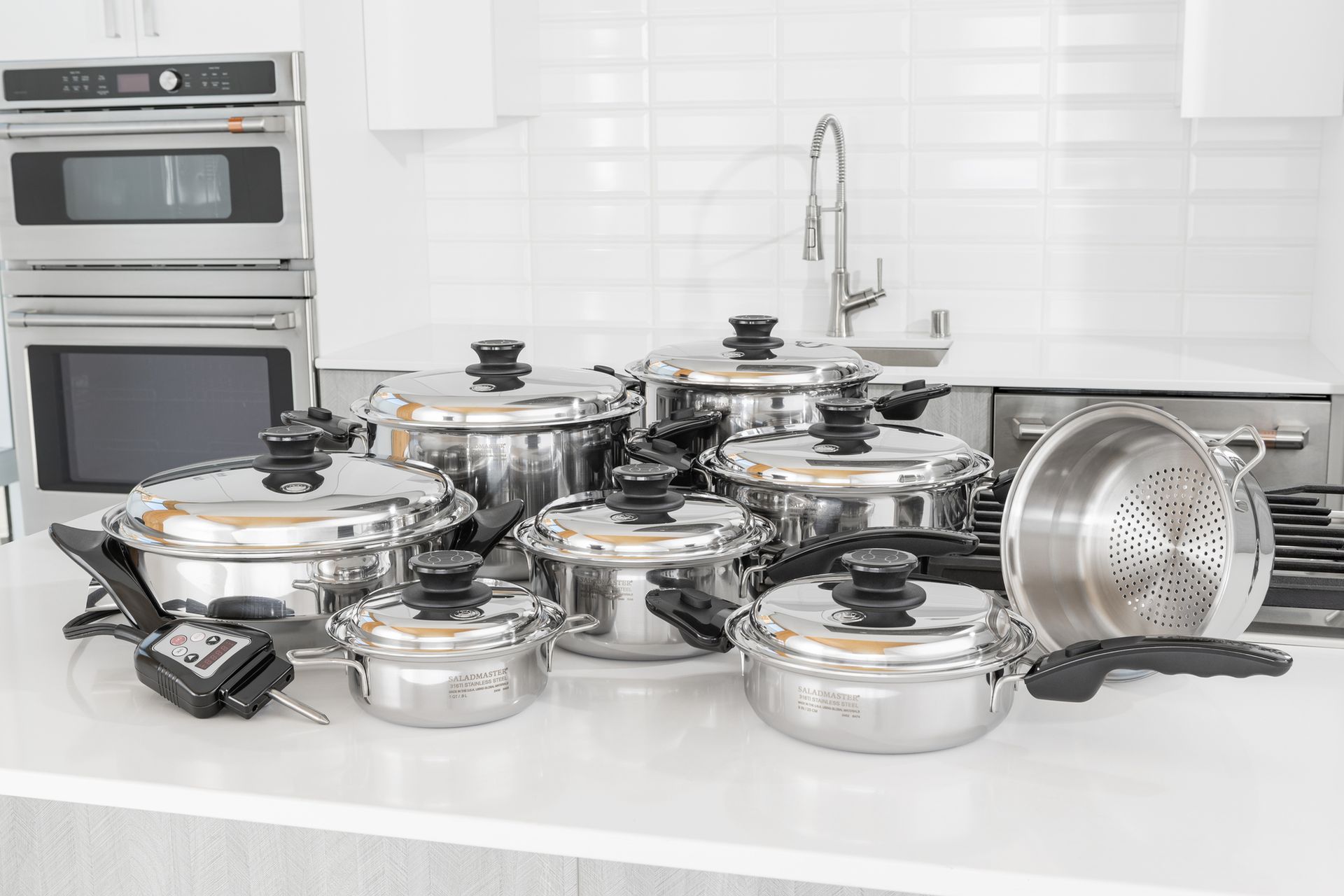
For many Australian families, high-quality stainless steel cookware is one of the strongest choices because it offers a combination of safety, durability, performance, and long-term value.
A good cookware set should help you:
- Cook with less oil
- Preserve flavour
- Prepare healthy family meals
- Avoid peeling coatings
- Cook a wide range of dishes
- Reduce the need for frequent replacement
- Feel confident about what touches your food
That is why stainless steel is often included in conversations around the best non-toxic cookware, healthy cookware, and non-toxic stainless steel cookware.
However, quality matters. Not all stainless steel cookware is the same.
Look for cookware with:
- High-grade stainless steel
- Multi-layer construction
- Even heat distribution
- Strong handles and lids
- A reliable warranty
- Compatibility with your stovetop
- Clear care instructions
- A design that supports the way your family cooks
What About “Waterless” or Low-Oil Cooking?
Some premium cookware systems are designed to help families cook with less added water and less oil. This can appeal to people who want healthier cooking methods without making meals bland or complicated.
The idea is to use controlled heat, tight-fitting lids, and quality construction to help retain moisture, flavour, and nutrients while reducing the need for excess fats.
For health-conscious families, this can be a major benefit.
Many families do not want to completely change what they cook. They still want their favourite meals, cultural dishes, soups, rice, vegetables, fish, meats, and family recipes. They simply want to prepare them in a healthier way.
That is where cookware choice can make a practical difference.
How to Choose the Best Non-Toxic Cookware
Before buying cookware, ask these questions.
1. Is the cookware made from safe, durable materials?
Look for clear information about the material. Stainless steel, cast iron, carbon steel, glass, and quality ceramic options are commonly considered by people seeking non-toxic cookware.
Avoid vague product descriptions that do not explain what the cookware is made from.
2. Does it rely on a coating?
Not all coatings are bad, but coatings can wear out. If you want cookware that lasts for many years, consider whether you want a coated or uncoated cooking surface.
Many families choose stainless steel because it does not rely on a synthetic non-stick coating.
3. Can it handle your cooking style?
This is especially important for multicultural Australian families who cook a wide variety of meals.
If you regularly cook curries, stir-fries, stews, soups, rice dishes, steamed vegetables, fish, meats, and large family meals, you need cookware that can handle more than basic frying.
4. Is it easy to clean?
Healthy cookware will not be used if it is frustrating every day. Look for cookware that is easy to clean once you learn the correct heat settings and cooking methods.
Many sticking issues happen because people use too much heat too quickly. With quality stainless steel cookware, the right technique matters.
5. Does it offer long-term value?
Premium cookware costs more upfront. That is the reality.
But long-term value depends on how often you use it, how long it lasts, and whether it replaces cheaper cookware that wears out quickly.
For a family that cooks daily, durable cookware can be a long-term investment in healthier meals, better food quality, and less waste.
Common Questions About Non-Toxic Cookware
What is the healthiest cookware to use?
There is no single perfect answer for every household. Many families choose stainless steel, cast iron, carbon steel, glass, or quality ceramic cookware when looking for healthier options. For everyday family cooking, high-quality stainless steel cookware is one of the most versatile and durable choices.
Is stainless steel cookware non-toxic?
High-quality stainless steel cookware is commonly considered a strong non-toxic cookware option because it does not rely on a synthetic non-stick coating and is built for long-term use. It is especially popular for families who want durable cookware for daily meals.
What is the safest cookware for everyday cooking?
For everyday cooking, many families look for cookware that is stable under heat, free from peeling coatings, durable, and suitable for a wide range of meals. Stainless steel cookware is often a strong choice because it performs well across many cooking styles.
Is non-stick cookware safe?
Non-stick cookware can be convenient, but concerns often arise when coatings become scratched, overheated, or worn. If your non-stick cookware is damaged or peeling, it is worth replacing. Families looking for safer long-term options often consider non-toxic stainless steel cookware.
Is ceramic cookware better than stainless steel?
Ceramic cookware can be easy to clean and attractive, but ceramic-coated cookware may wear over time. Stainless steel is usually more durable and does not rely on a coating. The better choice depends on your priorities: convenience, durability, maintenance, and cooking style.
What should I look for in a non-toxic cookware set?
Look for safe materials, strong construction, even heating, comfortable handling, long-term durability, and a design that fits the meals you cook most often. For Australian families, it is also important to check whether the cookware works with your stovetop, including induction if needed.
The Bottom Line: Choose Cookware That Supports Healthier Family Cooking
The best non-toxic cookware in Australia is not just about buying the most expensive set or following the latest trend. It is about choosing cookware that supports the way your family actually cooks and eats.
For families who care about health, food quality, durability, and long-term value, high-quality stainless steel cookware is one of the strongest options to consider. It avoids the common problem of peeling coatings, works across many cooking styles, and can support healthier everyday meals when used correctly.
Whether you are cooking vegetables, soups, rice, fish, meat, curries, stir-fries, or family favourites, your cookware should help you prepare food with confidence.
And sometimes the best way to understand the difference is not just to read about it — it is to see it in action.
Want to see how healthier cooking works in real life? Book a free online cooking experience with HealthMax and discover how the right cookware can help you prepare nourishing, flavourful meals for your family.
Recent Posts